
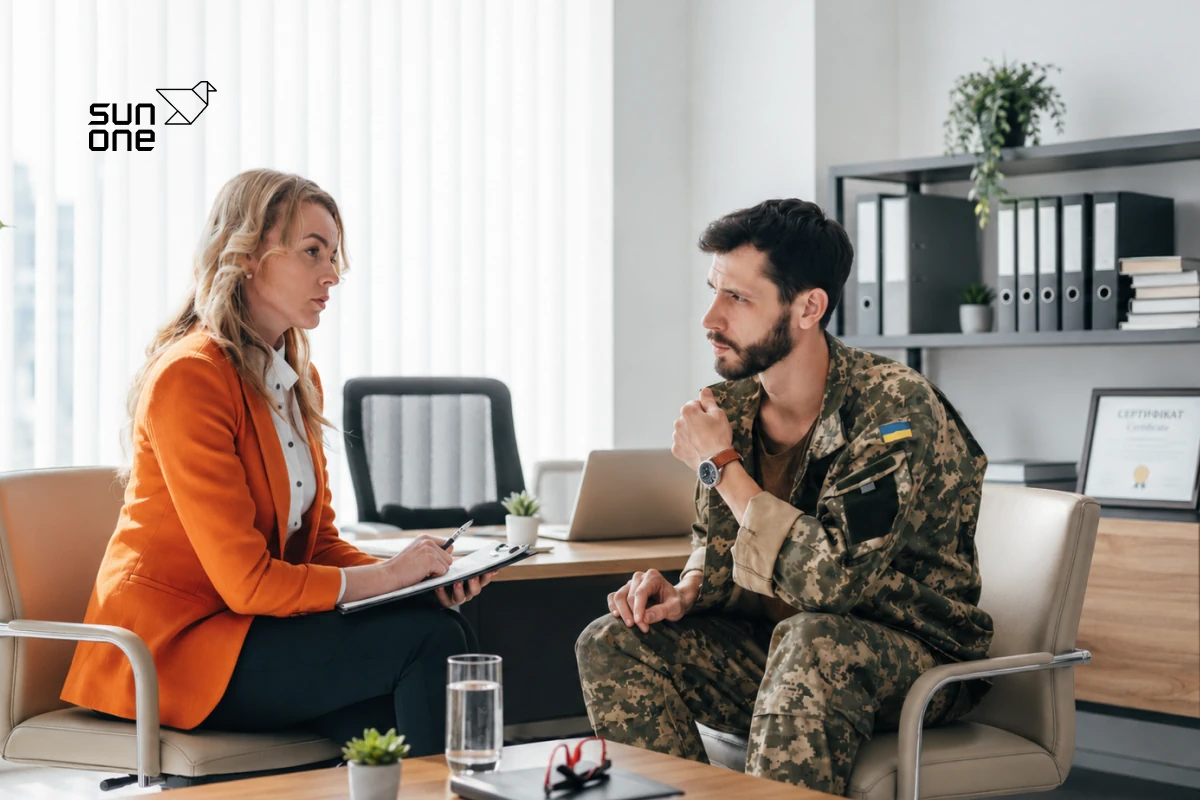
More and more companies in Ukraine are open to hiring veterans — and recruiters and HR managers are increasingly facing the question: how do you structure a conversation the right way, so you don’t offend or scare someone off with a question, while still getting all the information you need about the candidate?
Solomiia Trushkovska, Project Manager of Sun One’s Veteran Affairs Department, shared her insights on this. The company has developed a practical cheat sheet for recruiters that helps them conduct an interview with a veteran correctly — without excessive delicacy or, conversely, tactlessness.

The main rule: it’s just a candidate
“Talk with a veteran the same way you would with any other candidate — calmly, respectfully, and to the point,” — Solomiia emphasizes.
There’s no need to focus on military experience as something special or problematic. At the start of the conversation, it’s important for the recruiter to understand three things:
- what experience and skills the candidate has;
- what working conditions suit them;
- whether we’re a good fit for each other.
In the conversation itself, it’s important to speak clearly and to the point, treat the candidate as an equal, and pay attention to cues during the discussion. According to Solomiia, veterans value specifics, honesty, and clear rules and conditions — while vagueness and excessive delicacy, on the contrary, undermine trust.
What to ask — and how
The key principle: the recruiter isn’t asking about military experience, but about working conditions. All questions should be framed strictly in the context of the vacancy.
What to say — and what not to say
Here’s how “uncomfortable” questions can be adapted into a right and a wrong format — and which follow-up questions can help uncover deeper points if a candidate says everything is “fine”:
The logic is simple: instead of assumptions and “diagnoses” — a specific question tied to the actual conditions of the role.
If the conversation goes off track
Sometimes tension or even aggression from the candidate can arise during a conversation. Sun One recommends that recruiters have de-escalation techniques ready and know how to respond to personal accusations or attempts to manipulate them through guilt, without getting drawn into a conflict.
“You’re a recruiter, not a psychologist. If the situation goes beyond your scope, bring in a colleague or reschedule the conversation. That’s not a failure — that’s responsibility.”
How to decline candidates correctly
There’s a separate case: a candidate is strong, but the current working conditions don’t suit them due to physical limitations or the schedule. In such cases, Sun One uses pre-prepared decline scripts based on arguments tied to the vacancy’s conditions, rather than the person’s personal qualities or state.
Three rules that always work
To sum up, Solomiia Trushkovska highlights three principles worth following in any conversation with a veteran:
- Respect — without pity.
- Clarity — specific information instead of vague wording.
- No assumptions — ask, don’t diagnose.
Solomiia and her team build these principles into the recruiter cheat sheet and into the work of Sun One’s entire veteran affairs department.
“My dad is currently serving, and many of my close ones are in the military. So for me, this topic isn’t abstract,” — she says, explaining why this work is personal for her.
Sun One is looking for partners
Sun One is growing its veteran affairs direction and invites businesses to partner in employing veterans, including people with disabilities acquired through their service. The company handles candidate sourcing and selection, organizes training, supports adaptation at the new workplace, and manages communication with the employer at every stage — while helping the partner adjust their work processes to veterans’ needs.
The main condition for cooperation is the company’s willingness to listen to the team’s recommendations on adapting workplaces and supporting new employees.
“We aim to become a bridge between veterans and employers,” — explains Solomiia Trushkovska.
More details on the partnership terms — in the announcement on Sun One’s website. You can contact the company at info@sunone.com.ua.
 Sun One has been included in Forbes Ukraine’s Next 250 list
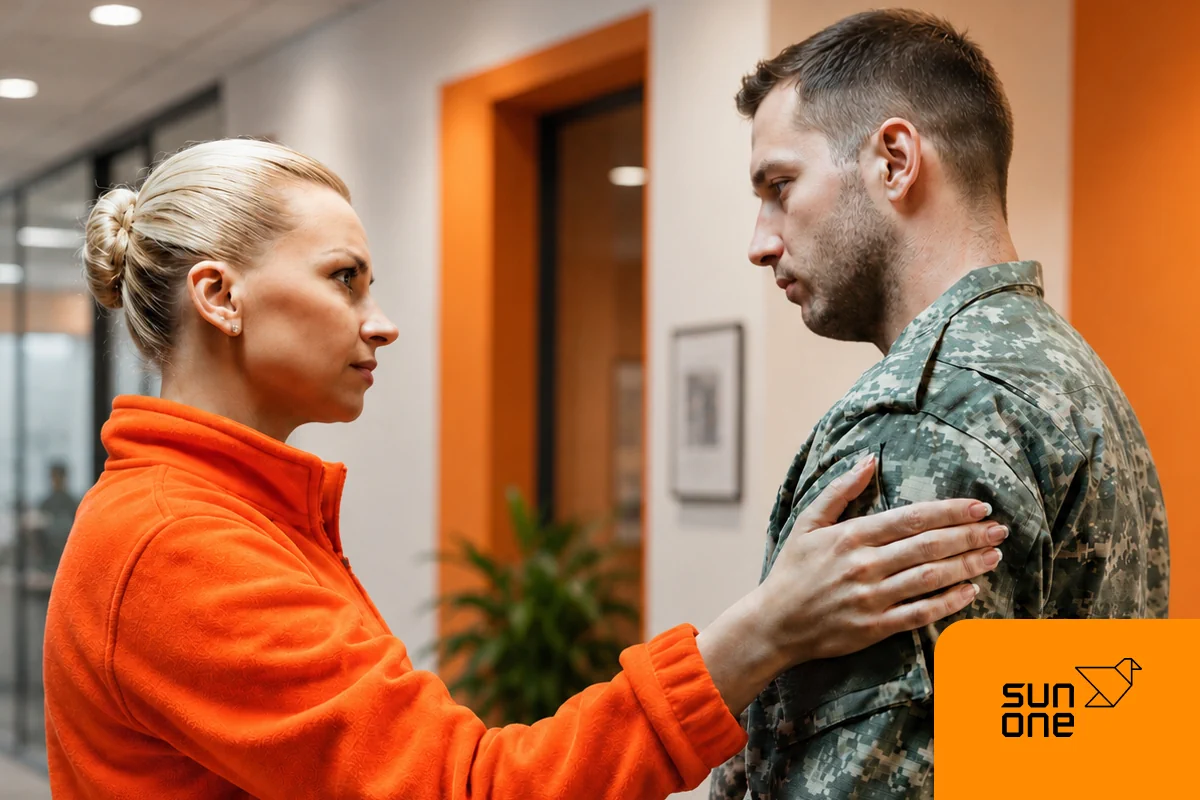 Sun One is Looking for Partners to Bring Veterans into Employment
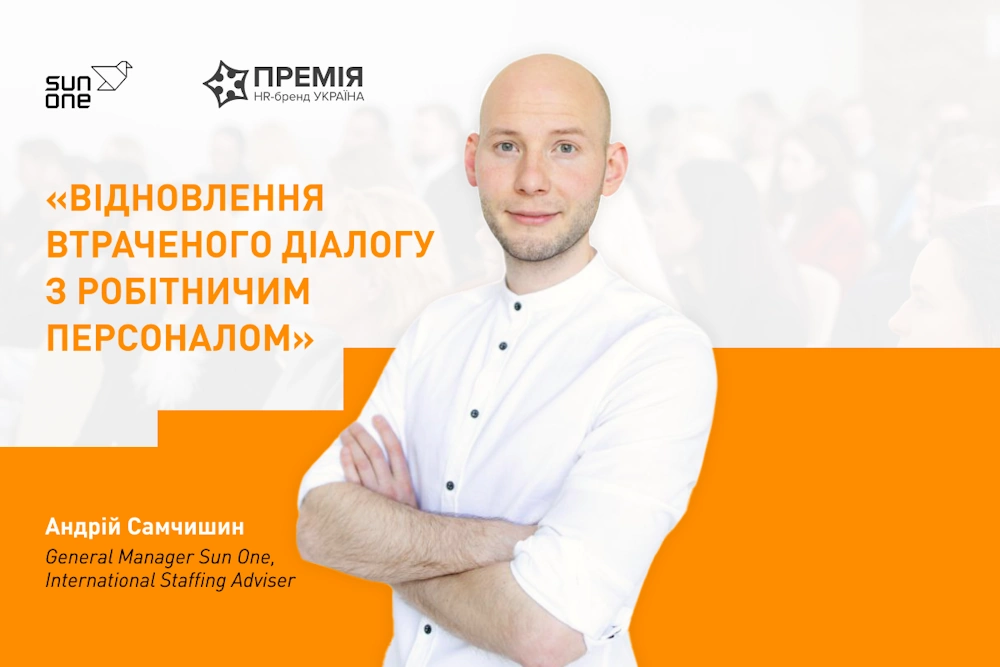 Sun One is the main partner of the “Workforce 2030” business coffee event